How Athian Compliance works
If you manage a compliance program, you know the overhead isn't the standard itself — it's everything around it. Chasing supplier submissions. Manually checking evidence. Re-explaining requirements every cycle. Assembling documentation before an audit.
Athian is built to handle that overhead so your team can focus on decisions, not administration. Here's exactly how evidence moves from a configured standard to a signed, audit-ready package.
Configure once. Stop re-explaining
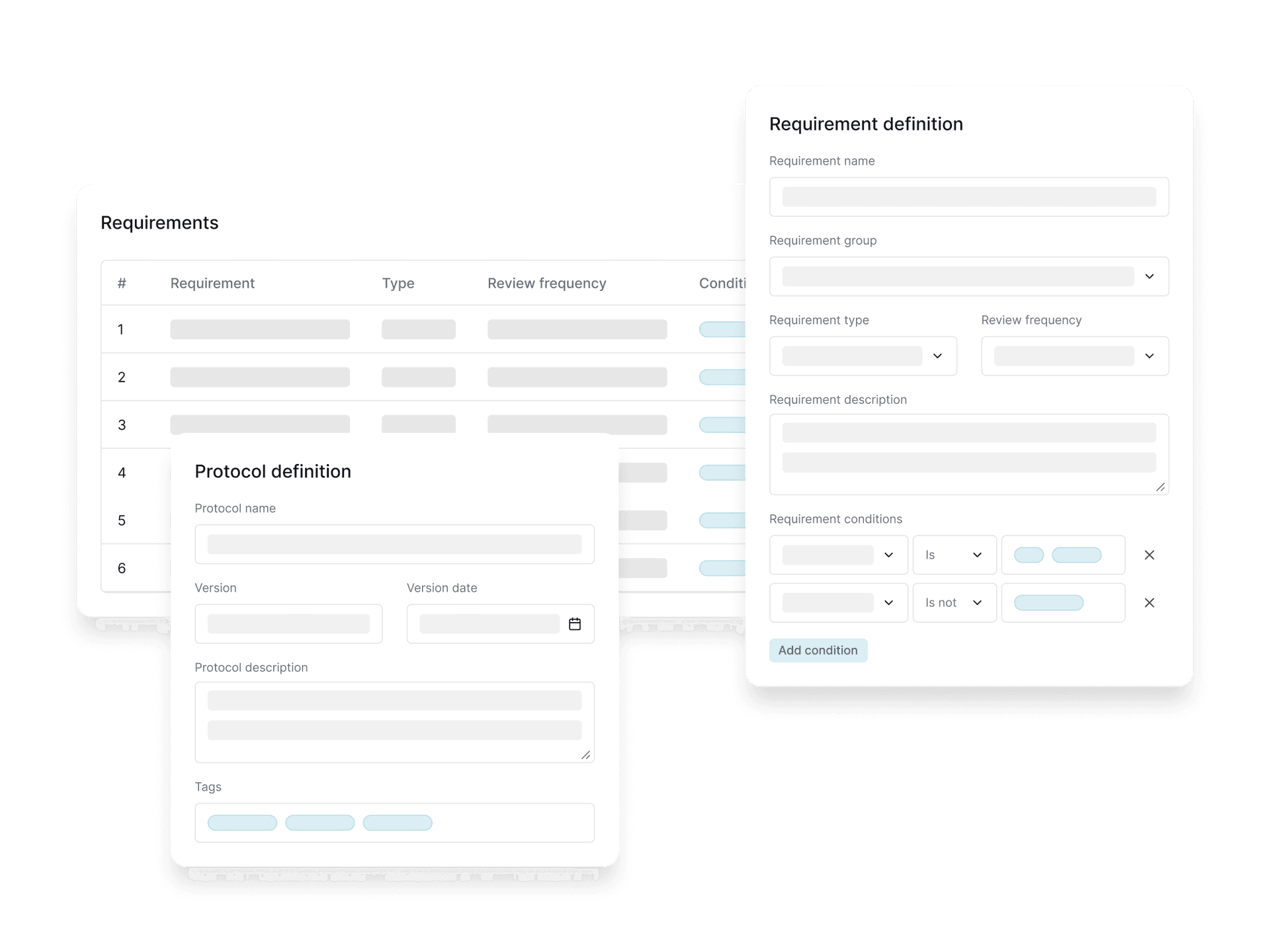
Every compliance cycle that starts with an email thread is a cycle that's already behind. Before a single submission comes in, your standard lives in Athian as a configured protocol — document types, data fields, expiry windows, acceptable formats, minimum thresholds, review frequency. All of it, in one place, visible to every supplier who needs to respond to it.
This means your team doesn't re-explain requirements each cycle, and suppliers don't interpret email instructions differently depending on who read them last. The protocol is the shared source of truth.
You control what "passing" looks like: a minimum score, a required document vintage, a specific certification level. Review frequency can vary by supplier risk tier — annually for low-exposure suppliers, quarterly for higher-risk ones. When requirements change, you update the protocol once and it propagates immediately. No re-briefing emails, no version confusion, no suppliers working from outdated criteria.
Suppliers submit. Your team doesn't chase.
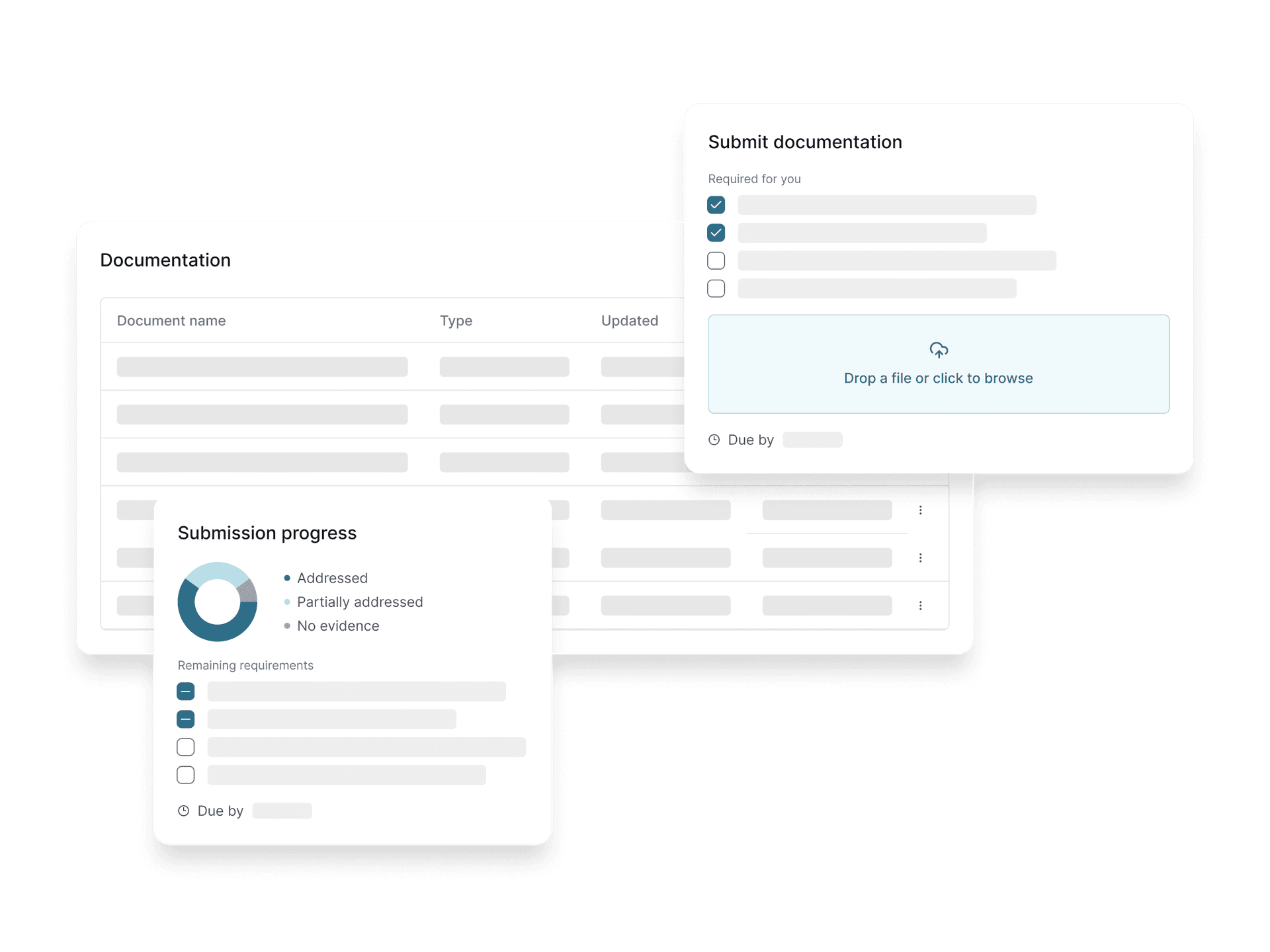
When a collection window opens, each supplier receives a tailored request that reflects exactly the criteria that apply to them — what's required, what format is accepted, and when the window closes. There's no ambiguity about what "enough" evidence looks like, because the protocol defines it precisely.
Submissions come directly into Athian. No email attachments, no shared spreadsheets, no manual logging of what arrived and what didn't. The coordination tax your team currently pays — chasing replies, consolidating versions, building tracking spreadsheets — is gone.
Progress is visible in real time. At any point during the window, you can see which suppliers have submitted, which are in progress, and which haven't responded — without sending a single status-check email.
AI does the discovery. Reviewers make the judgment calls.
By the time a reviewer opens a supplier file, the tedious work is already done.
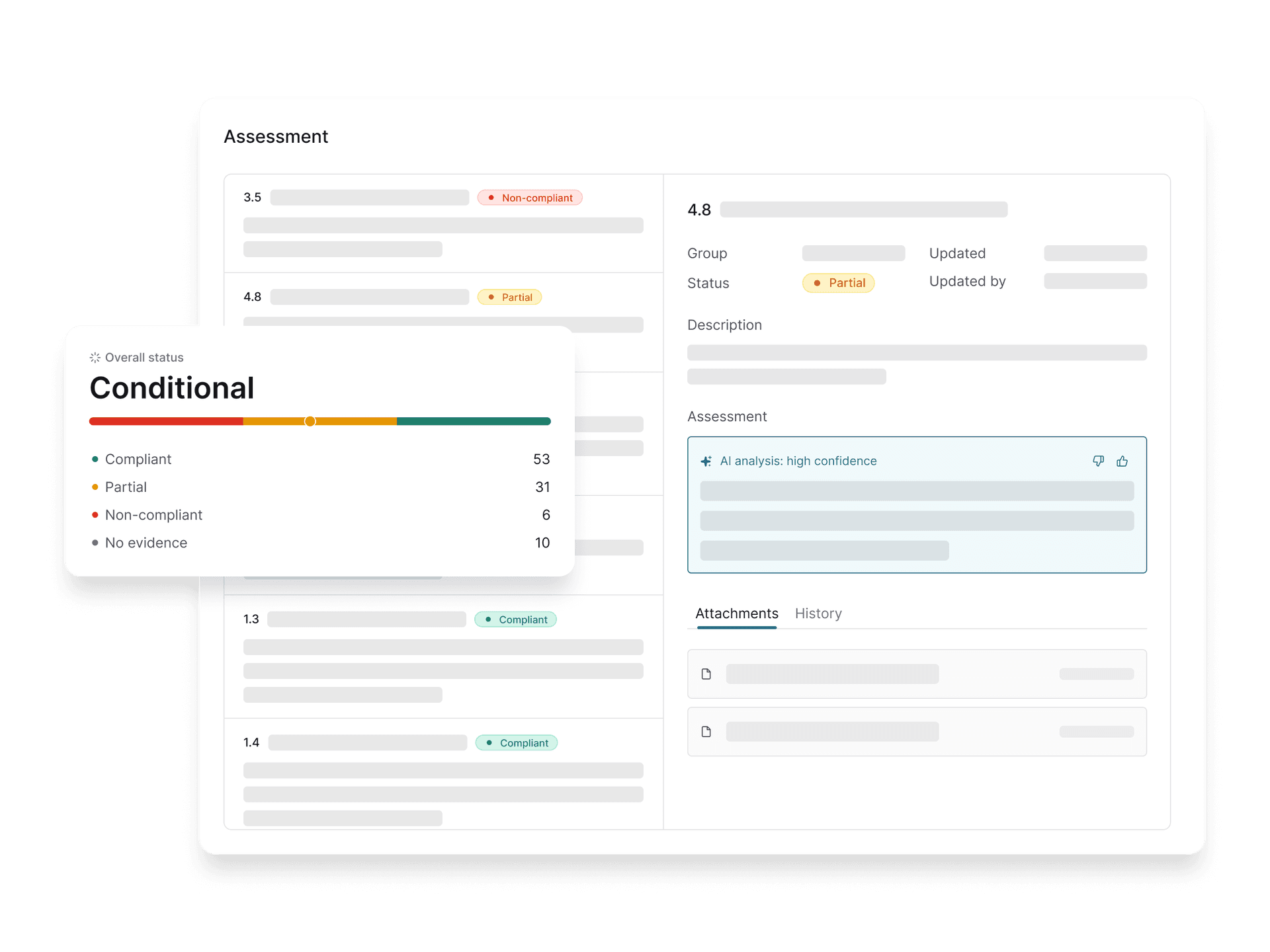
When a submission arrives, Athian's AI runs a structured gap analysis against your defined protocol: Is the document present? Is it within its validity window? Does the stated value meet your threshold? Is the format complete? The AI also surfaces statistical outliers — a figure that falls well outside the range for that supplier tier, a certification issued by an unrecognized body, a document covering a different reporting period than the one requested.
What the reviewer sees is a pre-scored summary: which criteria are satisfied, which are flagged with the specific gap identified, and which require human judgment. The AI doesn't make the final call. It prepares the file so review time is spent on decisions, not discovery.
Human sign-off at the right level, on both sides
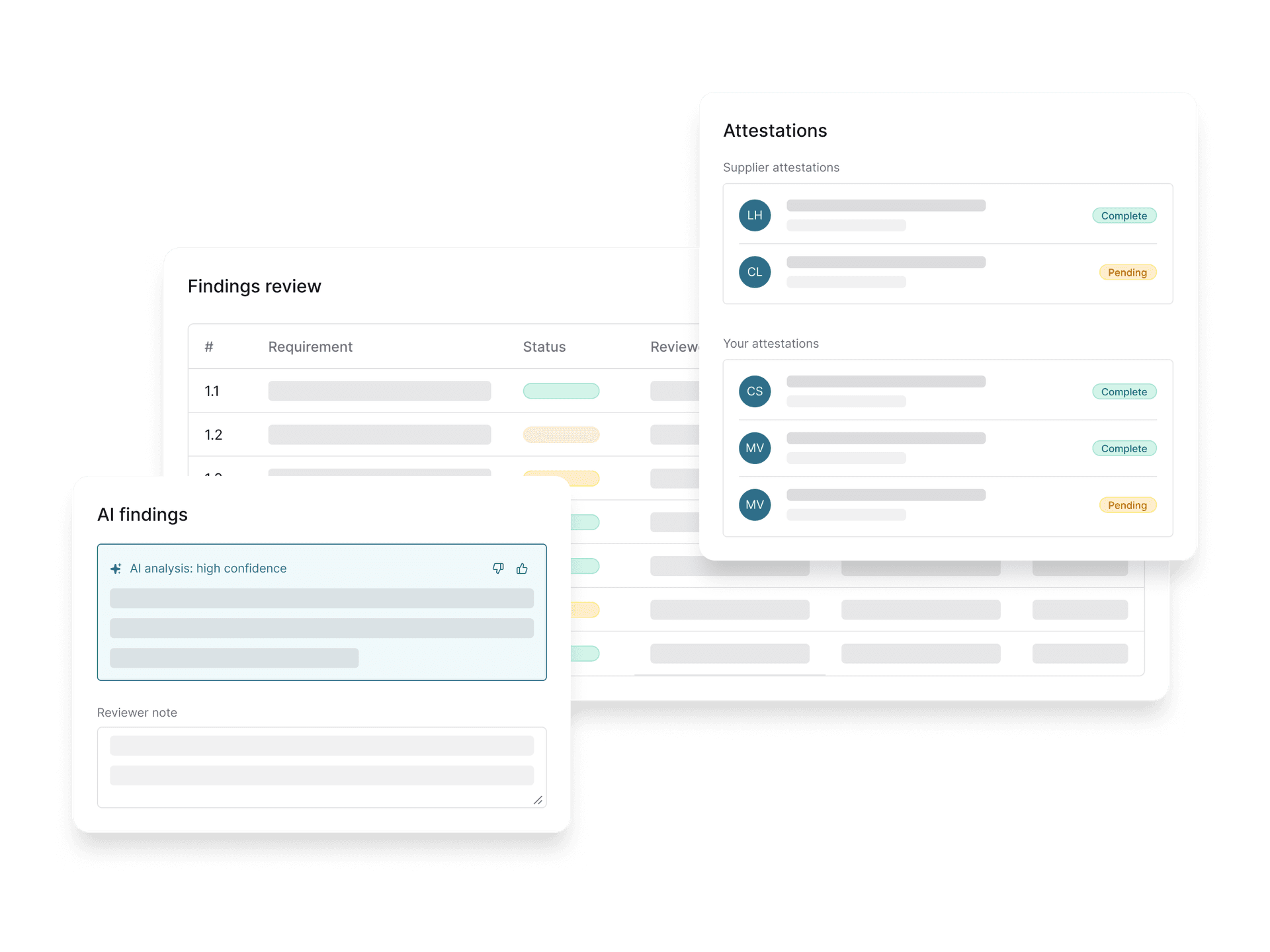
Attestation is two-sided. Suppliers attest that the evidence they've submitted is accurate and complete, under their own authority. Your compliance team attests that the reviewed file meets your program's standard. Neither side can attest on behalf of the other — the chain of responsibility is explicit and logged.
"AI prepares, people attest" means the AI's role ends with the pre-scored summary. The reviewer can accept the AI's finding, override it with a note, or escalate for a second opinion. Every decision is timestamped and attributed to a named reviewer. This preserves the audit defensibility that a fully automated system would undermine.
Supplier attestations can be delegated within the supplier's own organization: a sustainability manager may submit the evidence while a general counsel or CEO attests to its accuracy. The right person signs based on your program requirements, every time.
An audit-ready output package with nothing missing
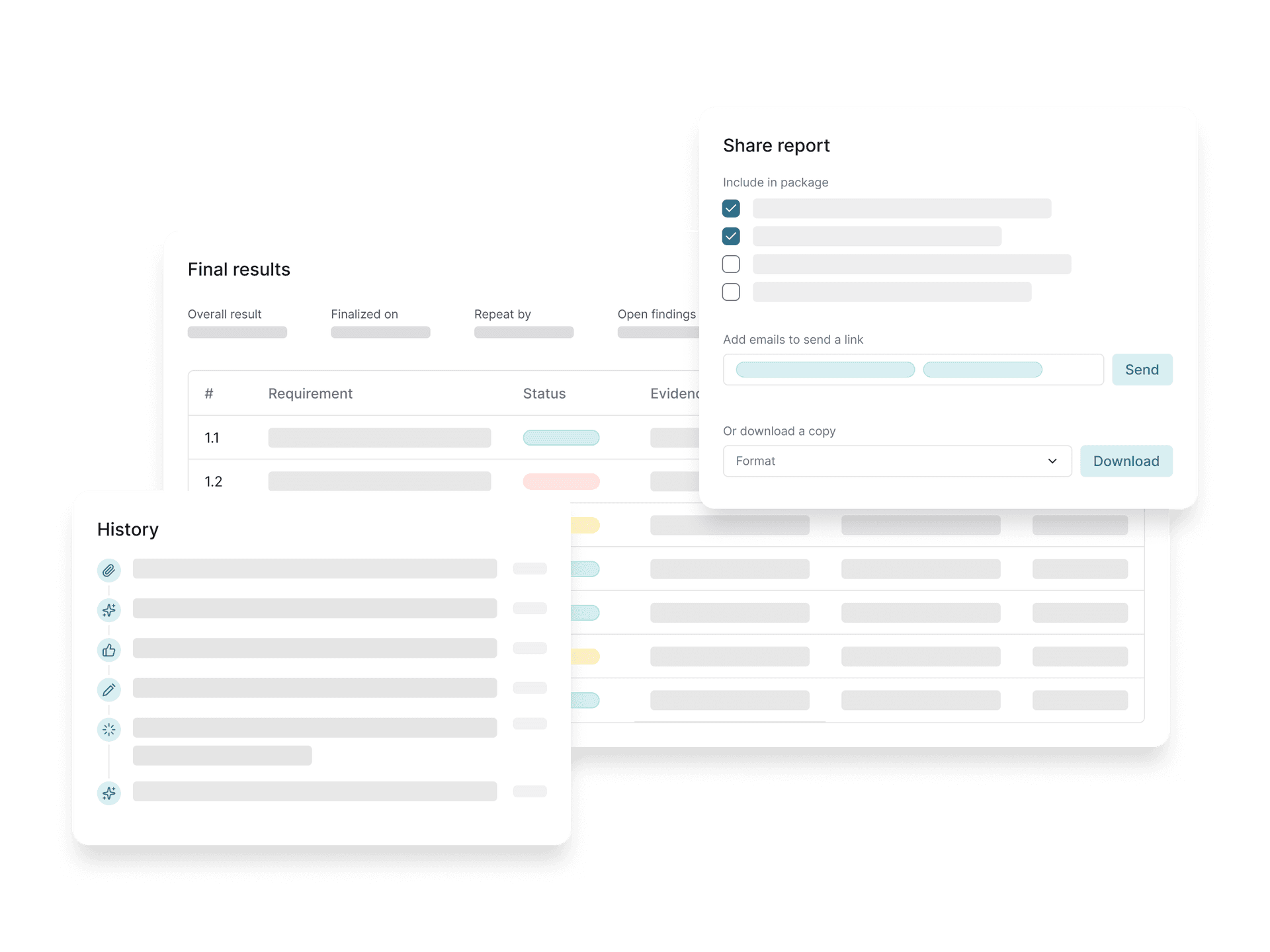
When a review cycle closes, Athian produces a structured output package — not a folder of uploaded files, but a compiled record organized by criterion, with each piece of evidence linked to the protocol requirement it satisfies.
The package contains:
- ✓Timestamped evidence with submission metadata
- ✓The AI gap analysis for each criterion
- ✓Reviewer decisions and any override notes
- ✓Supplier and compliance team attestations with named signatories and timestamps
- ✓Final pass/fail status against your defined protocol
The package is designed to hand directly to an auditor, regulator, or internal stakeholder with no further assembly required. The auditor sees the full evidence chain — from protocol definition to supplier submission to attestation — in a format they can work from. Not a pile of documents they have to make sense of.
Ready to see this for your program?
The best way to evaluate Athian is to walk through how the five steps map to one of your active compliance programs.